Floors That No Longer Slope or Bounce
Pier & Beam Home Leveling in Collinston for uneven floors, sagging beams, and crawl space settlement
G & W custom bathroom & remodeling operates two dedicated crews that handle pier and beam home leveling across Collinston and West Monroe, addressing the foundation settlement and crawl space water damage common in the region's older housing stock. Your crew identifies joist rot, beam settlement, and crawl space moisture before starting the releveling process to avoid shocking the floor structure during adjustment. Pier and beam construction dominates this area, and seasonal water intrusion accelerates the settlement patterns that cause doors to stick, floors to slope, and walls to crack.
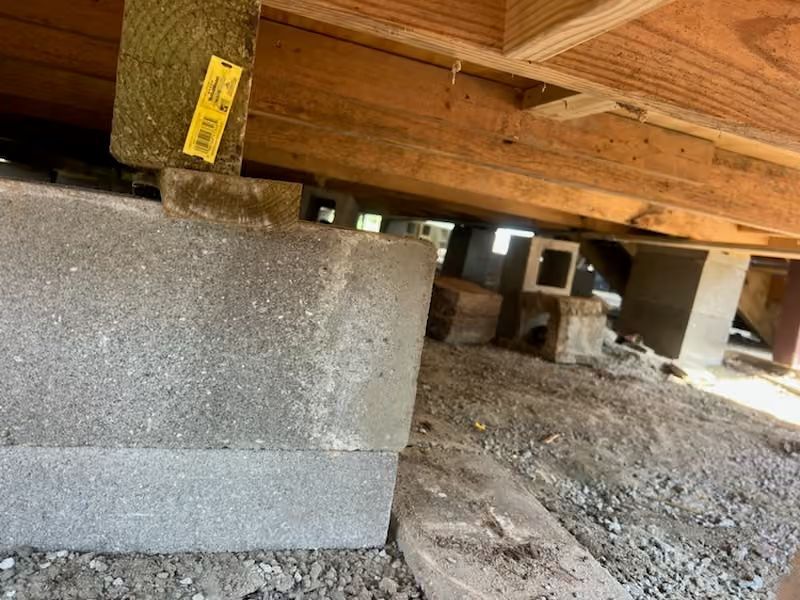
The leveling process starts in the crawl space, where beams and piers are measured to determine how far the structure has settled and where moisture has compromised support points. Adjustments are made incrementally—forcing a floor back into position too quickly can crack interior finishes and stress framing members. The measured approach accounts for how long the home has been out of level and what condition the underlying support system is in.
Schedule a crawl space inspection to identify which piers have settled and what caused the beam movement.
What Proper Pier and Beam Leveling Requires
Crawl space assessment comes first—the crew descends beneath the home to examine each pier, check for beam rot, and trace moisture sources that caused the original settlement. Piers that have sunk into saturated soil need to be reset or shimmed, and beams that show rot need replacement before any leveling takes place. Trying to level a home on compromised beams or unstable piers just shifts the problem temporarily.
Once the work is complete, your floors sit flat, doors close without binding, and gaps between baseboards and flooring disappear. G & W custom bathroom & remodeling uses grade-rated lumber for any beam reinforcement and addresses the moisture issues that caused the original settlement so the repair holds long-term. You'll notice that furniture sits level and that walking across rooms no longer produces the bounce or sag that made the floors feel unstable.
Leveling work does not include cosmetic repairs to drywall cracks or baseboard gaps that appeared while the home was settling—those are separate finish tasks completed after the structure stabilizes. The focus remains on returning the structural system to proper alignment and ensuring the piers and beams can support the load without continuing to settle.
Questions Before Starting Your Project
Homeowners in Collinston typically ask about the leveling process before work begins, particularly when dealing with older pier and beam homes that have shifted over time.
What causes pier and beam homes to settle in this area?
Crawl space moisture from seasonal water intrusion and saturated soil weakens pier stability, and freeze-thaw cycles in Louisiana shift the ground beneath support points. Older pier and beam homes were often built on piers that weren't set deep enough to resist settlement under those conditions.
How does the crew prevent floor structure shock during releveling?
The team makes adjustments incrementally rather than forcing the structure back into position all at once. Quick leveling can crack framing members and interior finishes, so the process accounts for how long the home has been out of level and adjusts support points in stages.
What gets inspected before leveling starts?
Every pier is checked for stability, every beam is examined for rot or insect damage, and the crawl space is assessed for standing water or drainage problems. Leveling a home on rotted beams or unstable piers wastes effort because the structure will settle again once weight is reapplied.
When should leveling be done instead of just shimming piers?
Shimming works when settlement is minor and beams remain sound, but homes that have settled more than an inch or show beam rot need full releveling with structural repairs. If doors won't close, floors slope visibly, or cracks appear in multiple walls, shimming alone won't correct the problem.
What happens to existing flooring during the leveling process?
Upper flooring typically remains in place during structural work—the leveling happens beneath the subfloor in the crawl space. Some cosmetic damage like baseboard gaps or minor drywall cracks may appear as the structure shifts back into alignment, but those are repaired after the leveling is complete.
G & W custom bathroom & remodeling currently manages projects across an 80-mile radius from West Monroe, handling the subfloor and releveling work that older pier and beam homes in this region routinely need. Request an on-site crawl space evaluation to determine what's causing your floors to slope and what structural work will correct it.